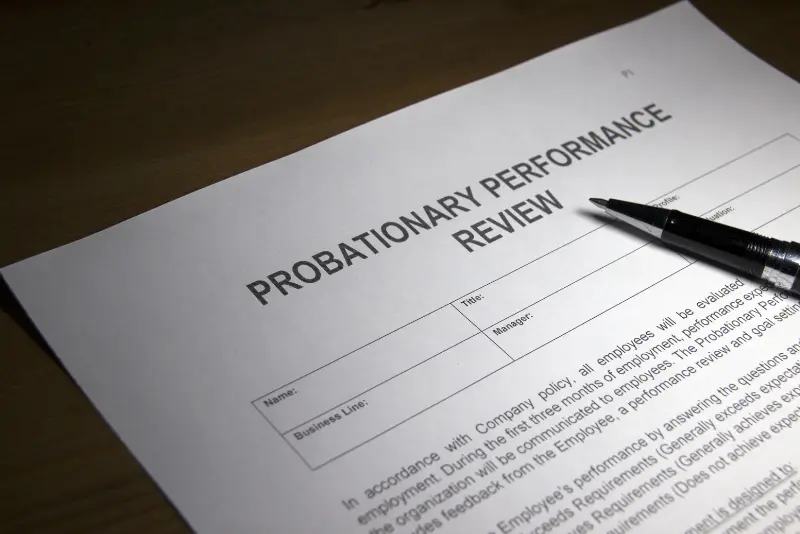
Being on probation doesn’t mean you lose your legal rights. A lot of people think that during those first few months, an employer can fire you for any reason at all. That’s not how it works in California.
Sure, your boss can keep a closer eye on your performance, and it’s generally easier for them to let you go in that probation window. But they can’t use probation as an excuse to fire you for something illegal. If you’re let go because of your race, gender, disability, or pregnancy, that’s discrimination. If you’re shown the door right after reporting a problem at work or asking for a medical accommodation, that could be retaliation.
Probation just changes how much explanation your employer needs to give if they want to fire you. It doesn’t wipe out the protections California gives every worker. So if the timing feels suspicious or the reason doesn’t add up, don’t hesitate to ask questions.
They Put You on Probation. Then They Fired You. Here’s What That Actually Means.
You landed the job, showed up, and got to work. Maybe you were just a couple of weeks in, maybe six, maybe almost to the end of those 90 days. Then you got the news. You were let go.
Somewhere along the way, you probably heard, “Probationary employees don’t have the same rights.”
But here’s the thing: that idea might be common, but it’s one of the most damaging myths in California employment law. Probation gives your employer a little more wiggle room, but it doesn’t give them free rein to do whatever they want.
What “Probationary Period” Actually Means
Most employers set up a probationary period, usually 30, 60, or 90 days, to formally check things out. The idea is simple: both you and your employer are still figuring out if the job is the right fit. They’re deciding if you belong on the team, and you’re making sure the job matches what you expected.
During this time, employers do have more leeway to let someone go. They don’t have to jump through hoops or set up a lengthy improvement plan. And since California is an at-will state, they never really need a detailed reason to fire you anyway. Probation just puts a spotlight on that flexibility when you first start.
But here’s what probation doesn’t do. It doesn’t put California’s anti-discrimination laws on hold. It doesn’t wipe out your right to be protected from retaliation. And it definitely doesn’t give your employer a free pass to fire you for an illegal reason just because you’re new.
Probation changes the procedural bar. It doesn’t change the law.
Your Rights Start on Day One
Your rights don’t start after a waiting period. In California, the protections you get under laws like the Fair Employment and Housing Act, the Labor Code, and the ADA kick in from day one. There’s no fine print that says, “Wait 90 days before you’re covered.”
From the moment you start your job, you’re protected from being fired because of things like:
- Your race, color, or where you come from. If a manager suddenly says your accent is making people uncomfortable and you’re let go for a “performance issue” that came out of nowhere, that’s not okay.
- Your gender, pregnancy, or family status. Maybe you mentioned a pregnancy at your two-week check-in, and by week six, your “attitude” was suddenly a problem. That kind of timing tells its own story.
- Your age, if you’re 40 or older. Sometimes, probationary periods are used to quietly push older workers out before they’ve even settled in. Courts see right through that.
- Your disability or a request for accommodation. If you share a health condition or ask for a schedule tweak, and then lose your job soon after, it probably wasn’t really about “fit.”
- Your religion or sexual orientation. California is clear: these things aren’t up for debate at any stage of employment.
Just because you’re new doesn’t mean the rules shrink. If anything, fresh hires are more at risk for this kind of treatment, since they’re less likely to speak up.
The Retaliation Trap
Retaliation during a probationary period happens more often than most people think, and it can be tough to spot because everything moves so quickly.
Picture how these early terminations usually look on paper: there’s no performance record, no official warnings, nothing to compare against past reviews. The employer just says it “wasn’t working out.” That kind of vagueness is exactly what makes retaliation so easy to slip by in those first few months.
But take a look at these situations.
You raise a safety concern in your third week and get fired by week five. You report that a manager made a comment about your religion during onboarding, and you’re gone before your 60-day review. You let your employer know you have a health condition that might mean occasional medical appointments, and suddenly, two weeks later, there’s talk of a “skills mismatch.”
Just because probation gives employers more flexibility doesn’t make these firings legal. The stage of employment doesn’t matter. What matters is whether the real reason you were let go was illegal. Retaliation is still retaliation, whether it happens on day 10 or day 300.
If you think you were retaliated against, contact CA Termination Lawyer right away. We’ll look at your situation and explain your legal options clearly. If your firing wasn’t illegal, we’ll tell you that too.
What About Contracts and Offer Letters?
Here’s a detail most people don’t think to check.
Some offer letters, employee handbooks, or onboarding materials include language that quietly gives you extra protection, even if you’re still in your probationary period. Phrases like “employees will only be terminated for cause” or “performance issues will be addressed through a formal review process” can actually hold your employer to a higher standard, no matter how new you are.
If you signed an offer letter with specific terms or received a handbook that spells out a particular termination process, that paperwork counts. Your employer can’t just ignore their own written policies because you’re still in the early days.
That’s exactly why it’s so important to go over those documents with a lawyer, rather than trying to figure it out on your own.
The Pattern to Watch For
Wrongful termination during probation almost never announces itself. You won’t get a note saying, “We’re firing you because of a protected characteristic.” Instead, it usually shows up as a business decision, a supposed culture mismatch, or concerns that seem to come out of nowhere.
What really gives it away is the pattern leading up to the firing. Pay attention to the timing. Did it happen right after you reported something, disclosed a condition, or made a request? Notice if performance issues suddenly appeared right after a protected conversation. Watch how the feedback changed following a particular event.
The timeline is evidence. The order of events is evidence. What was said in those early check-ins, who was present in those meetings, and even what was written in onboarding emails can all matter.
Don’t Wait to Find Out Where You Stand
California has strict deadlines for filing wrongful termination claims. In some cases, you have as little as one year from the day you’re let go. If you wait around hoping things will sort themselves out, or if you assume that being fired during probation means you can’t challenge it, you might lose your chance to act at all.
The sooner you reach out, the more options you’ll have.
At CA Termination Lawyer, we take a close look at the full picture. The timeline, the paperwork, what was said, what changed, and when it happened. If your employer tried to use the probationary period as cover for something illegal, we know how to spot it and how to build a case around it.
You didn’t lose your rights the day you started your job. You had them from the beginning.